
About the Wildlife Intelligence Project
As our planet faces unprecedented challenges, including the loss of precious wildlife and ecosystems, animals continue to adapt to their surroundings to find new ways to thrive — just like us.
The more we understand about wildlife and their intelligence, the more we can reflect on our place and purpose within the natural world.
Inspired by the groundbreaking work of Dr. Jane Goodall and the Templeton Prize, the National Geographic Society conducted a global search for three emerging early-career scientists whose work provides deeper insights into animal minds, behaviors and decisions.
Each will be named a National Geographic Explorer and welcomed into the global Explorer community.
Mauricio Cantor
The ecology and evolution of cultural and cooperative behavior among dolphins and humans.
Mauricio Cantor is a Brazilian biologist researching how cognitively advanced animals behave in a changing world through social, cultural and ecological dynamics. His research focuses on the emergence of patterns and strategies in animal societies, specifically cetaceans, due to their behavioral diversity, learning ability and complex social systems. Cantor is an assistant professor at Oregon State University, head of the Lab for Animal Behavioural Interaction Research In The Ocean (LABIRINTO) and adjunct faculty at two Brazilian universities where he teaches and supervises ocean behavioral ecology.
One of the few cases of human-wildlife cooperation involves separate cultural fishing practices between wild dolphins and humans. Emerging independently in Brazil, Myanmar and India, net-casting fishers and dolphins cooperate to catch fish, benefiting both groups. This unique interaction raises key questions about how cooperative behaviors evolve and why they remain rare among different species. Working in these regions where this cooperation still exists, Cantor and his team will test if the same behavior has evolved across all study locations, if the nature of all human-dolphin interactions is cooperative, and if specific ecological conditions contributed to its evolution. This project will also train local collaborators to establish long-term monitoring of each system and work to raise global awareness of this rare and declining cooperation between wild animals and humans.

Felicity Muth
How does ecology shape cognition? An exploration with wild bees.
Felicity Muth is a researcher studying animal behavior and cognition, focusing on learning and memory with clear functions in nature. Working primarily with bumblebees, she is head of the Muth Lab and an assistant professor in the Department of Neurobiology, Physiology and Behavior at UC Davis. As a science communicator, Muth has discussed bee cognition and the challenges faced by women in science on NPR and local news. She also published a children’s book titled “Am I Even a Bee?” to teach children about native bees.
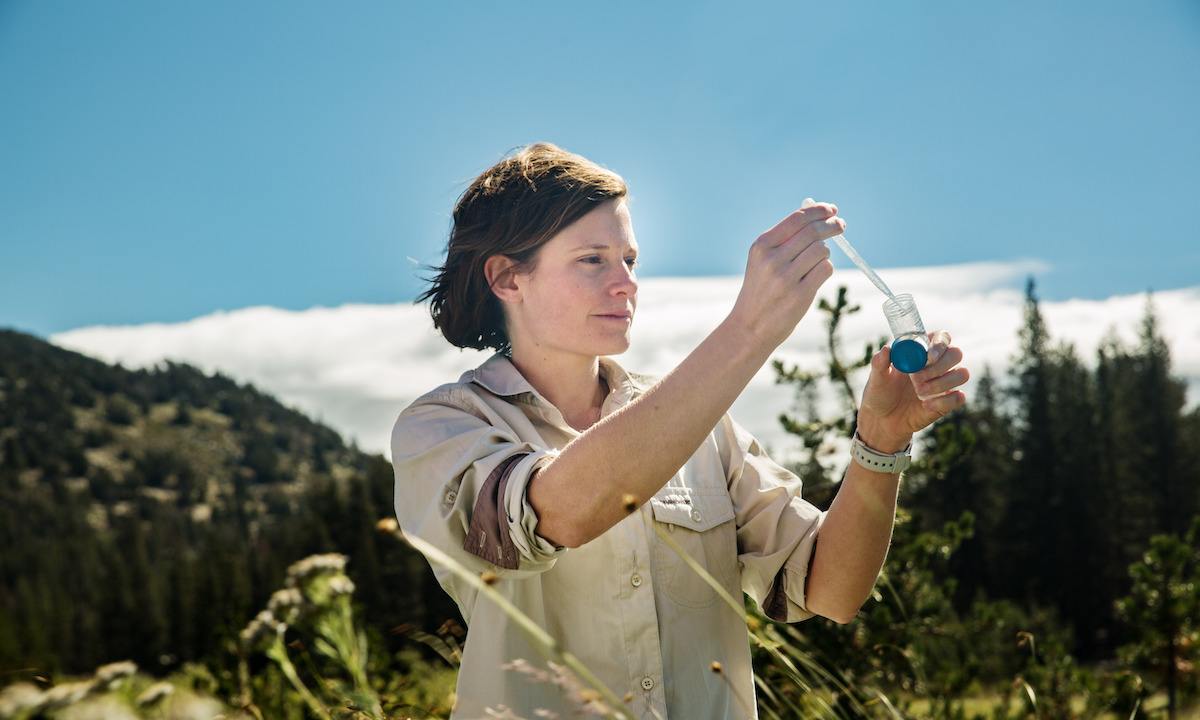
An animal’s environment and ecology play a key role in shaping physical and cognitive traits. Bees have complex behavior but easily identified cognitive processes, making them ideal for studying how environmental factors impact these traits. Working with wild bees from rural Nevada and California, Muth will study how the environment shapes learning and decision-making. She will study queen bumblebees to understand what makes them “smart” and how their cognition differs from workers, then compare across species to see how dietary specialization drives cognitive differences. Despite the pollinator crisis, our knowledge of bee behavior is largely limited to honeybees and two bumblebee species. With over 4,000 native bee species in North America, the team aims to highlight this vast biodiversity, bring attention to bees beyond their role as pollinators, and build empathy by showing how their cognitive abilities evolved under environmental pressures.
Tiago Falótico
Researching the behavior, social learning and culture of wild primates.
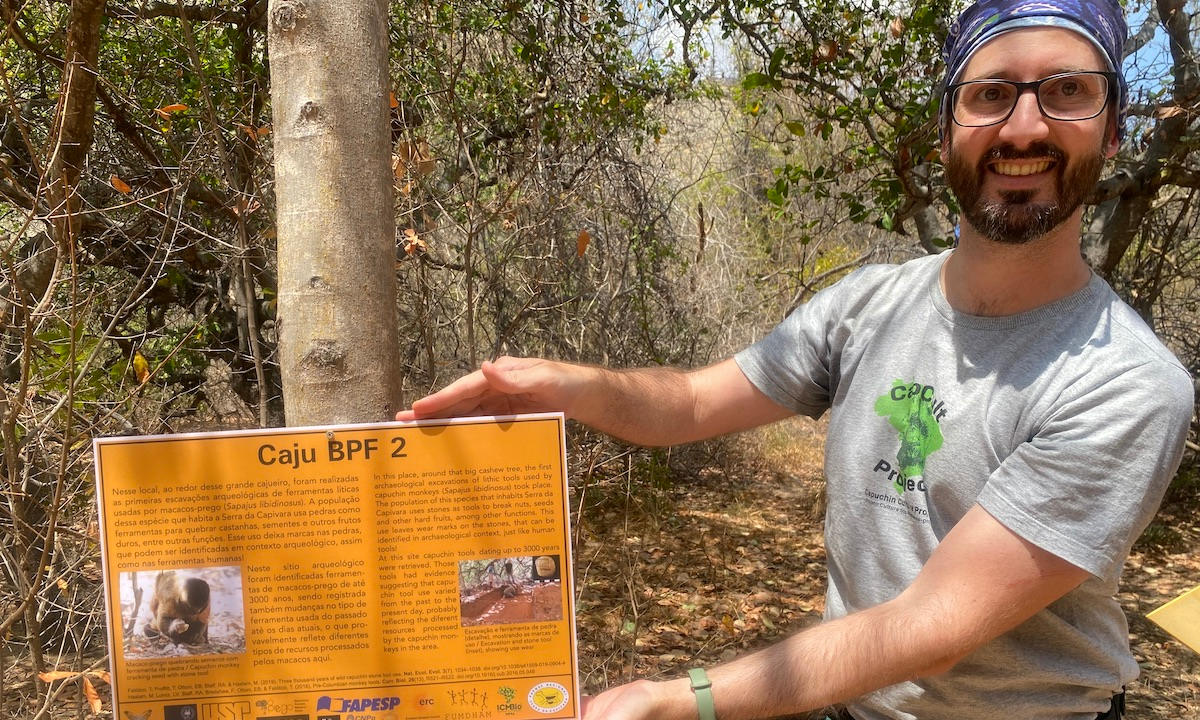
Tiago Falótico is a Brazilian primatologist and ethologist. Since 2007, Falótico has been working with the wild capuchin monkeys in Serra da Capivara National Park in Brazil’s Northeast region to investigate their tool use behavior. Tiago is a Young Investigator Fellow at the University of São Paulo and the co-founder of the Neotropical Primates Research Group (NeoPReGo), a nonprofit organization that supports field research and environmental socio-education about neo-tropical primates.
Capuchin monkeys habitually use tools to acquire food, communicate and for self-care, but how this behavior transfers across individuals within the same group and how it emerged independently in geographically separated populations is unknown. In this project, Falótico and his team will compare two populations of wild bearded capuchin monkeys in Brazil to study the ecological and genetic differences among the populations. They will also research the variation in the use of stone tools and probe tools across different sexes and ages to identify the causes of this behavior. Falótico will use the primate archaeology approach to identify past stone tool use behavior in both populations and determine any variations over time. Modern stone tools and their fragments/flakes will also be compared to the lithic tool material of other primates, including humans. This project will be an important contribution to the understanding of primate cognition, cultural behavior and human evolution.